

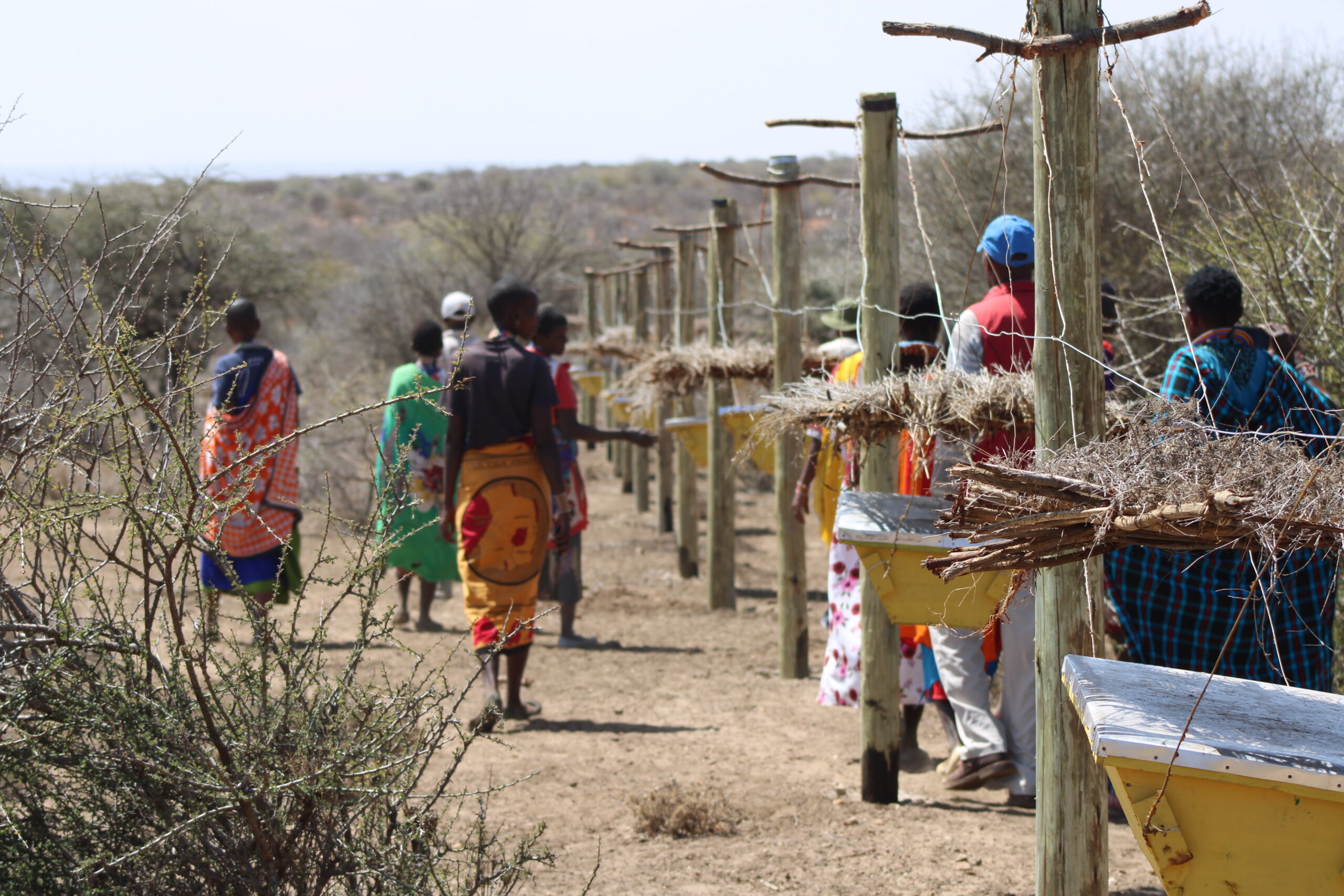
Women from a self-help group in Naibunga Conservancy walk along a stretch of their beehive fence earlier this year © Derick Wanjala/Save the Elephants.
A middle-aged woman stood beside sacks of freshly harvested maize, more than she could ever remember harvesting in recent years. Wrapped in a colourful shuka, she smiled as she showed Save the Elephants’ coexistence team her bountiful harvest. For years, elephants had raided the crops in her farm near Arabuko-Sokoke Forest along Kenya’s coast, leaving her family struggling to survive, but this season was different. Using methods from Save the Elephants (STE) Human-Elephant Coexistence (HEC) Toolbox, shared through our Training of Trainers (ToT) Programme, she successfully protected her farm, and for the first time, was not worried about how to feed her family.
Her story is not unique – it’s one of many across East Africa where community lives are being positively impacted by our coexistence work. Although the ToT programme takes place at STE’s Human-Elephant Coexistence and Research Centre in Tsavo, southern Kenya, its impact is felt far beyond. The ToT programme is built on a simple idea: train the right people so they train many others when they return home. Over three days, community leaders and conservation practitioners, including human-elephant coexistence rapid responders, learn practical tools from the HEC Toolbox, gaining skills to reduce conflict and protect livelihoods. Since its launch in 2023, the programme has trained 335 individuals from over 30 organisations across 10 countries in East, West, Central and Southern Africa. These trainees are now implementing over 26 coexistence methods, while passing that knowledge on to hundreds more.
Recent follow-up visits across Kenya and Tanzania tell of the scale of the programme’s impact. In Kenya’s Laikipia and Meru alone, trainees have already reached out to over 1,000 community members with toolbox knowledge through second-order training.
In lower Laikipia’s Naibunga Conservancy in Kenya, beehive fences now protect farms from crop-raiding elephants, allowing aloe vera and grass to grow safely. Shared water troughs are secured with white-rock barriers, helping reduce competition between elephants and livestock. Supported by the Istituto Pace Sviluppo Innovazione ACLI (IPSIA), local women groups and the Laikipia Permaculture Centre are producing soaps, lotions, and honey, effectively using the implemented coexistence measures to supplement their income.
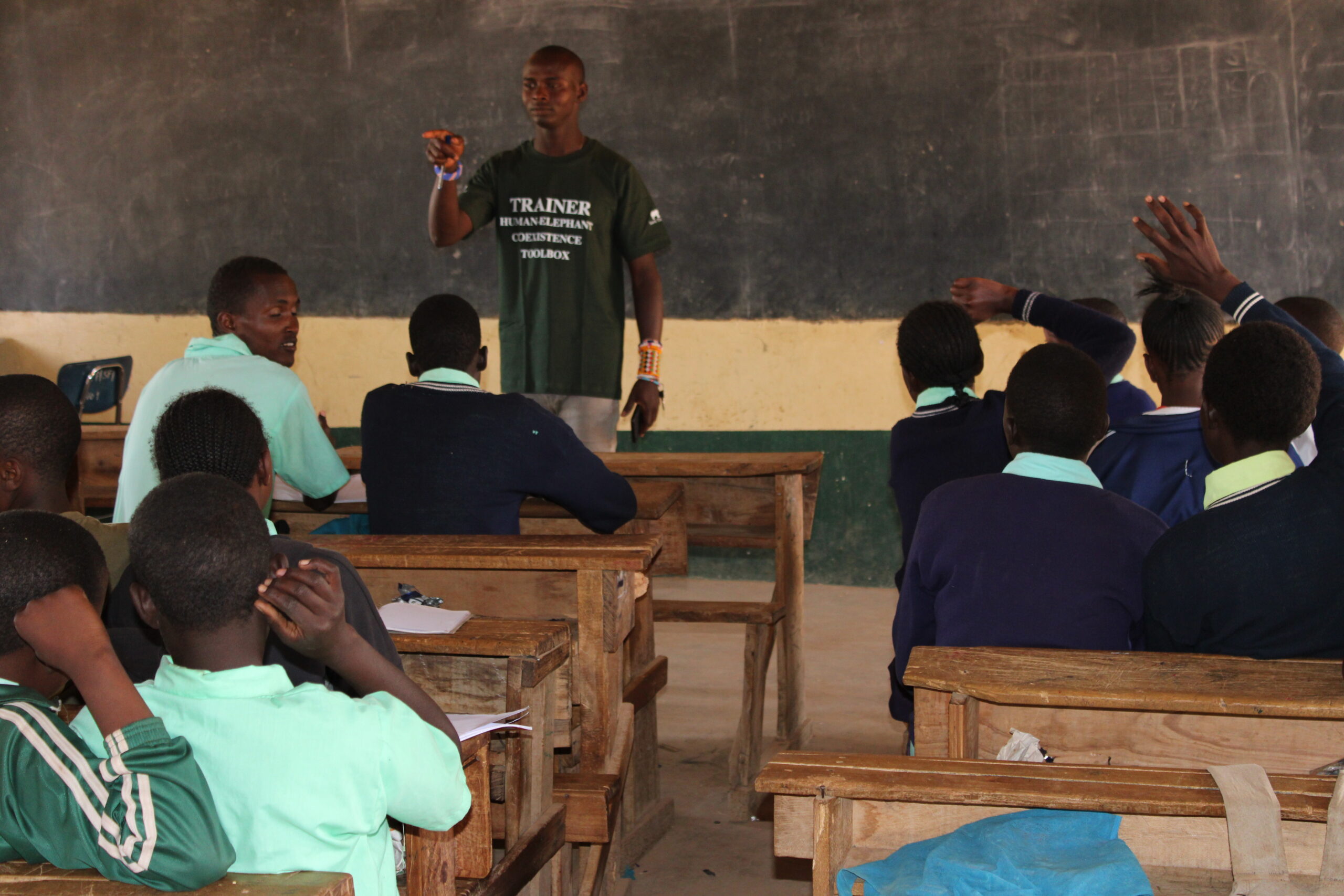
An Elephant Aware Behaviour session at Ewaso Primary School in Loisaba Conservancy this year © Yuka Gliday/Save the Elephants
At Loisaba Conservancy in Kenya, the Chui Mamas, a group of over 600 women, have also successfully diversified their livelihood. From beekeeping and beadwork to permaculture and conservation agriculture, they’ve adopted various HEC Toolbox methods suited to their pastoral landscape. Here, beehive fences, metal strip fences, and trip alarms protect grass grown for livestock. This community has extended the multiplier effect of the ToT even further than we anticipated, training coexistence ambassadors who go on to train other community members.
“We came to realise that when they went back to their communities, they trained coexistence ambassadors who are mainly youths. These ambassadors now champion human-elephant coexistence across the landscape which is mainly pastoral in nature, placing greater emphasis on elephant-aware behaviour to ensure safety in shared grazing areas,” says Yuka Gliday, STE’s Wildlife Survey Technology and Research Officer, and a ToT Trainer.
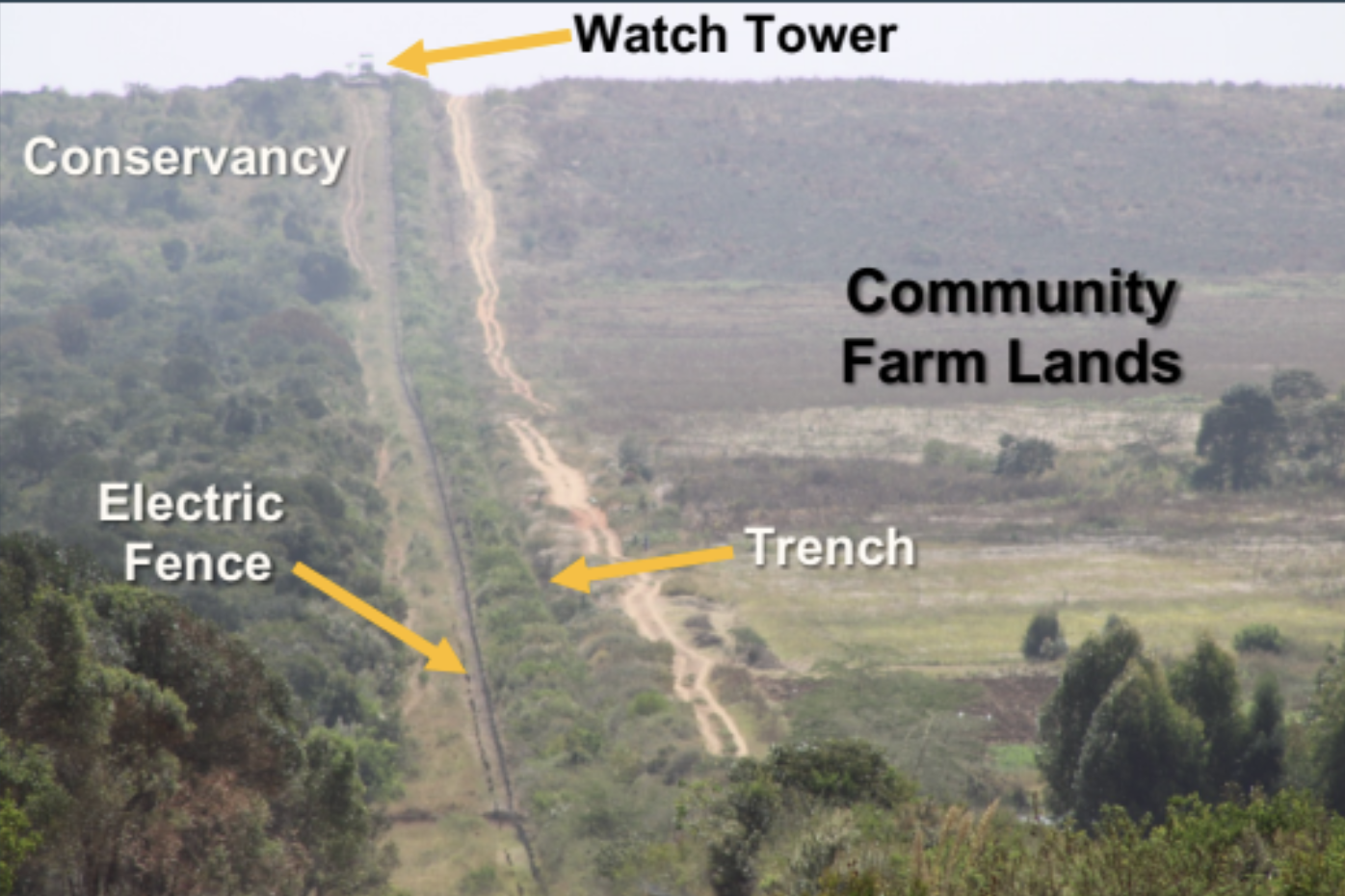
Select HEC coexistence measures implemented in Muktan Conservancy © Yuka Gliday/Save the Elephants
The challenge is more complex at Mukutan Conservancy in Kenya. An electric fence separates the wildlife habitat from community farmland, but elephants, being highly intelligent and adaptable, continue to breach it. In response, trainees from STE’s Coexistence programme have reinforced vulnerable sections with trenches, stone walls, and watchtowers, creating an early warning system for farmers. At the same time, efforts to protect the Louniek Corridor which links Mukutan and neighbouring Mugie Conservancies, are helping guide elephant movement and reduce conflict, though increasing human settlement remains a challenge.
What makes STE’s Human-Elephant Coexistence Toolbox Trainer of Trainees model work is its practical, field-based training – which allows for effective knowledge transfer – as well as the trainers insistence that there is no one-fits-all solution to coexistence. They stress that trainees must adapt the over 80 coexistence methods featured in STE’s HEC Toolbox to fit the unique situations in their respective landscapes.
“Our goal is not just to train individuals,” says Derick Wanjala, STE’s Coexistence Project Officer and ToT lead trainer, “It’s to build a network of people who return to their landscapes, share knowledge, and adapt these methods to their realities.”
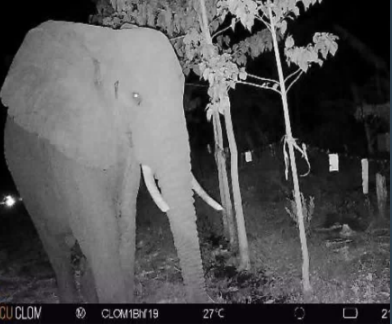
Screengrab of camera trap footage showing an elephant deterred from crop raiding by a combined metal strip and beehive fence in Meru. © Courtesy of Born Free Foundation
Perhaps the most large-scale application of this adaptability was witnessed in Meru, eastern Kenya, where the Born Free Foundation has tailored Toolbox methods to fit their landscape. Communities bordering Meru National Park are using over 25 beehive fences, comprising over 300 hives, alongside metal strip fences to protect farms. Elsewhere, chilli based deterrents and noise deterrents such as the Mwakima Noise Cannon are used. By refining what works for them, they have developed a site-specific toolkit, based on STE’s HEC Toolbox, which outlines the methods that work best in their landscape.
All these cases show the effectiveness of the ToT’s multiplier effect but it is Dominic Mutali’s case that shows us how much further it can go, transferring knowledge well beyond the initially intended community. He attended STE’s 7th ToT while working for Mgeno Conservancy as a community ranger in Tsavo before moving to Mugie Conservancy. At Mugie, Dominic has trained 124 people and introduced multiple Toolbox methods in the Conservancy that had not previously engaged with the programme.
“When I came here in 2024, cases of human wildlife conflict were very high. People were losing crops to elephants and you would see many elephants limping or injured from spear wounds. I started with school talks on elephant-aware behaviour and we now have six schools with Conservation Clubs where we teach this. I also go from community to community sharing elephant-aware behaviour and deterrent methods that work in this landscape, such as early warning measures. The hostility is reducing. Instead of spearing or snaring them, the communities now call us (rapid response team) when they spot elephants close to their farms,” says Dominic.
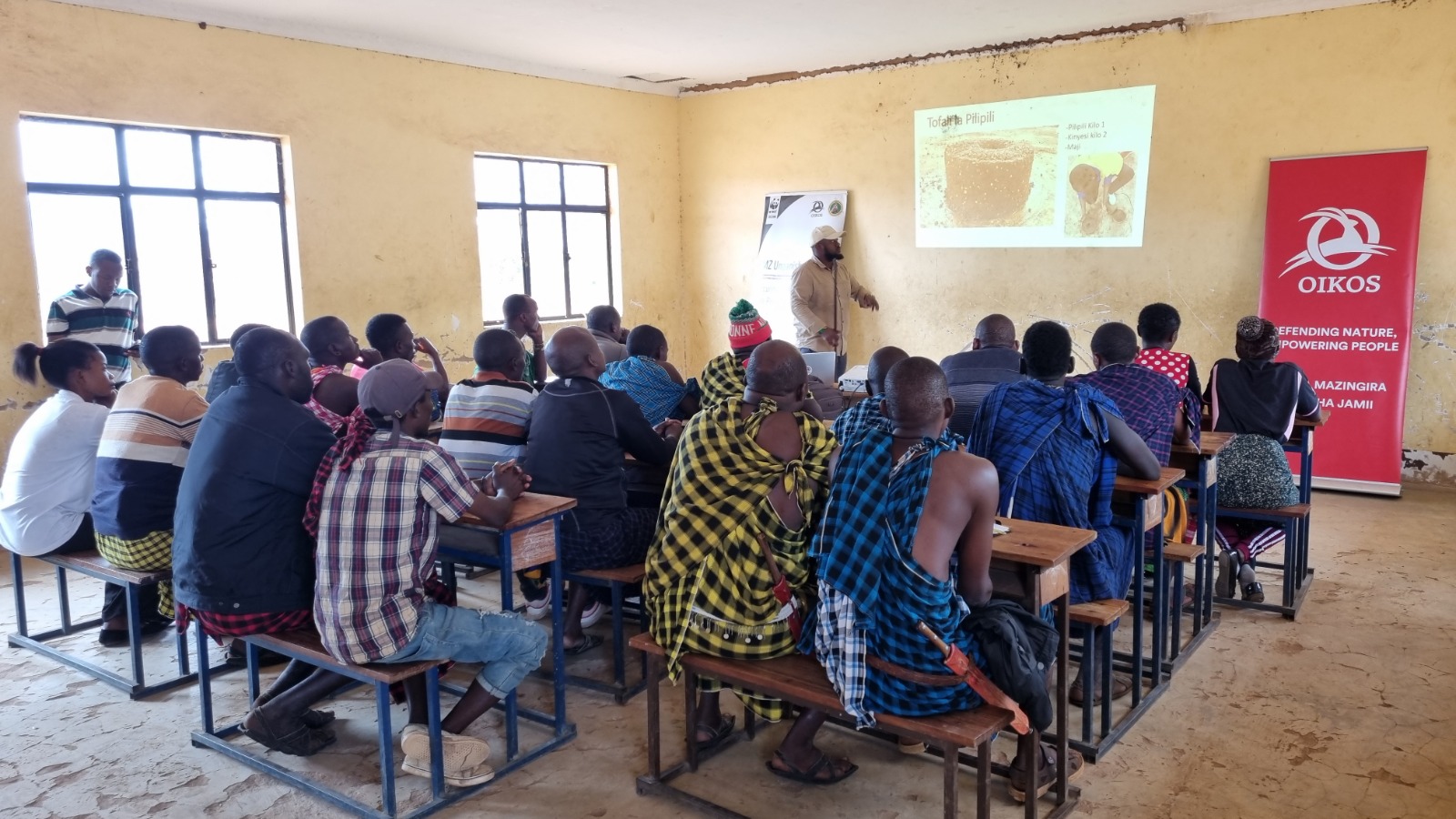
A ToT trainee from OIKOS East Africa training community members in Tanzania on the use of chilli-based elephant deterrents in March this year © Erick Swai/OIKOS East Africa
Across Kenya’s southern border, in Tanzania, recent follow-up visits by our team to our Elephant Crisis Fund partners – OIKOS East Africa, Tanzania Elephant Foundation, African People & Wildlife and TANAPA – revealed that Toolbox methods are already in use, alongside growing collaboration between organisations and mapping of cross-border elephant movement. Partners are aligning their coexistence approaches in ecosystems where elephants move freely, but management often does not.
The ToT programme is about amplification. It provides a sound foundation, but it is communities and partners who adapt and scale these coexistence solutions. The results are clear everywhere that our team has visited thus far; stronger livelihoods, and safer ways for people and elephants to share spaces.