

When an acoustic recorder detached from a bull elephant’s tracking collar and vanished beneath the Ewaso Nyiro River, getting it back became more than a search mission – it became a race to save months of irreplaceable recordings that could help scientists understand one of the animal kingdom’s most sophisticated communication systems.
For three days, our long-term monitoring team searched the riverbed for the device in Samburu National Reserve alongside me and Director of Field Operations David Daballen. I had only just returned from the Central African Republic, where I’d been retrieving identical recorders from forest elephants, before heading straight into another recovery mission. The recorder had detached exactly as designed from the GPS collar of a bull named Anwar. Incredibly still transmitting a signal from deep beneath the riverbed, it proved incredibly difficult to reach. The team diverted sections of the river by constructing pools, dams and dykes, then spent hours digging through waterlogged sand. On the third day, their persistence paid off.

Still transmitting from deep beneath the riverbed, the recorder’s signal guided the team to the spot to dig. © George Wittemyer / Save the Elephants
So why go to all this trouble for one buried recorder? Because the data inside it could help unlock one of the biggest mysteries in elephant behaviour: how elephants talk to one another.
Anwar is one of the study elephants across Africa helping researchers unravel this mystery. Known for his curiosity around vehicles – he’ll often rest his trunk on a car’s roof or bonnet – he is part of a group of bulls that regularly visits nearby Archer’s Post in search of food and water during the dry season. These journeys take him between protected habitats and landscapes shared with people, offering valuable insights into how elephants communicate as they navigate an increasingly human-dominated world.
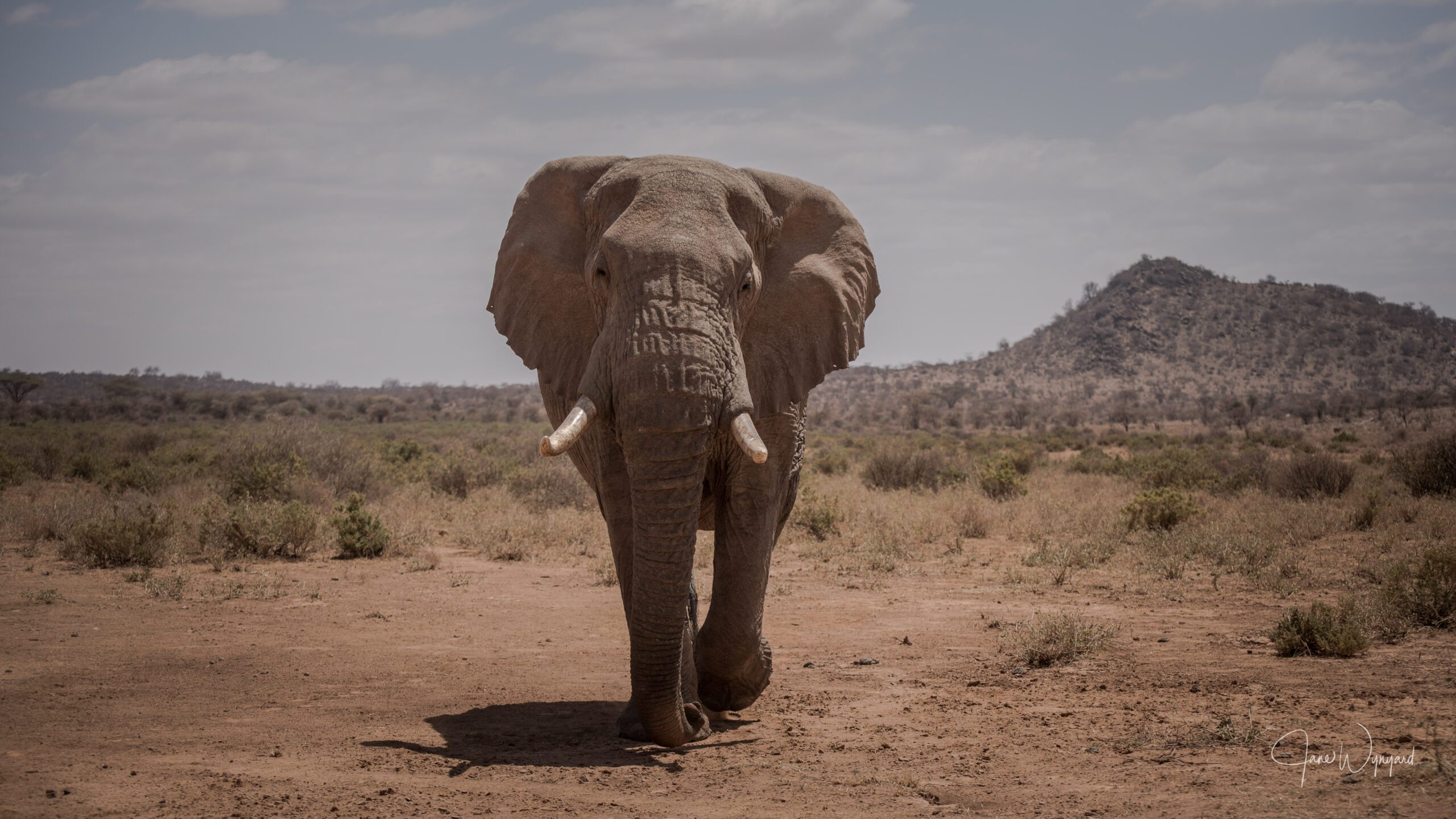
Anwar in Samburu National Reserve. © Jane Wynyard / Save the Elephants
Elephants are vocal learners: they can hear a sound, learn to interpret it, and use it to convey information. That’s a rare ability in the animal kingdom – and the foundation for complex communication. We know voice is central to elephants’ rich social lives but we still can’t tell what their calls actually mean. Cracking that code takes two things: a huge amount of recorded calls, and advanced AI to find the patterns inside them.
That’s exactly what these acoustic units are built to gather. Fitted to GPS collars, each one acts as a “hot mic,” capturing everything an elephant says over two to three months. So far, we’ve successfully deployed and recovered seven units, together holding thousands of calls.

Recovered at last – the acoustic “hot mic” holding months of Anwar’s calls. © George Wittemyer / Save the Elephants
The recordings are already offering early hints about when and where elephants communicate most. These findings are still preliminary, but the picture forming is a fascinating one: elephants seem to ‘talk’ a lot around dawn and dusk, and tend to go quiet in places they may perceive as risky. This is our first detailed look at how elephants communicate over days and months, and an important step towards understanding what they’re saying.
We look forward to sharing the full findings with you in due course.