

Turning uncertainty into purpose
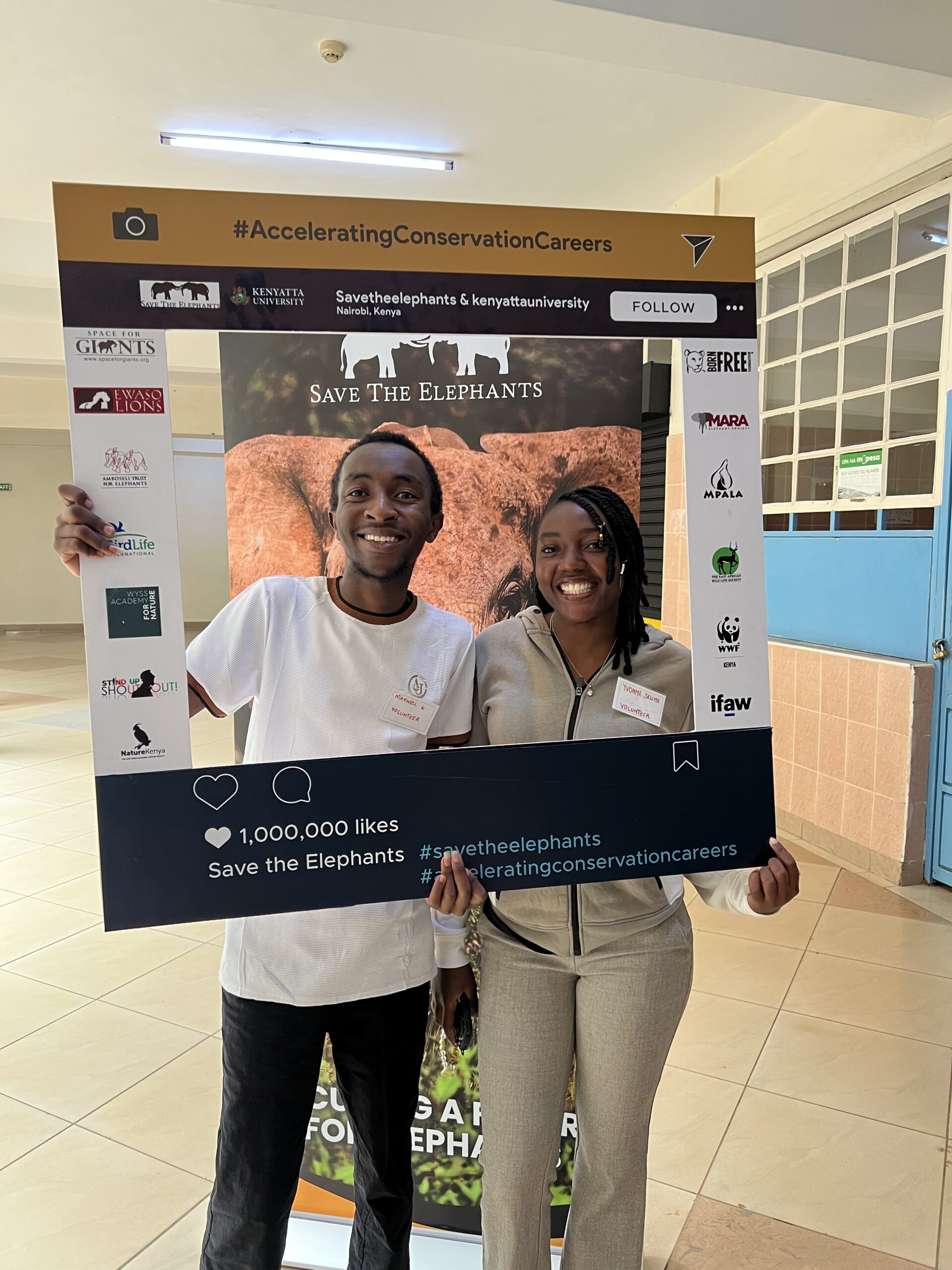
Yvonne Ekesa with a colleague at the STE-KU Conservation Careers Symposium
When Yvonne Seline Ekesa received her university admission letter to study Conservation Biology at Kenyatta University, her first reaction… confusion.
“What is Conservation Biology?” she asked.
Growing up in rural western Kenya, Yvonne had envisioned a career in medicine or athletics. As a talented volleyball player, she had secured a partial scholarship to a private university in Nairobi, where she was required to cover her living expenses and the remaining tuition fees – nearly USD 2,000 per annum in total – a sum far beyond what her single mother could afford. With a government student loan available, she was accepted to Kenyatta University (KU), unsure of what her assigned field of study would mean for her future.
For many who grow up in rural Kenya like Yvonne, career paths are often limited to the familiar few, such as teaching, nursing, medicine and law. Other professions, if known at all, feel uncertain and ‘less marketable’, especially for families who barely eke out a living, and sacrifice a lot to get their children through school.
Upon reporting to the university, Yvonne discovered that there were only a handful of students enrolled in her class, making the course feel more obscure and risky. At first, she tried an intra-university transfer to pursue a more traditional path, but after learning about the field’s scope, she decided to give it a chance. Over time, exposure through field trips, conservation forums and exhibitions gradually transformed her uncertainty into purpose.
As she neared her final year of study, two questions remained: “What does a career in conservation actually look like, and is it open to me?”
Answers began to take shape at our third Conservation Careers Symposium, jointly organised by Save the Elephants (STE) and KU in 2025. More than 200 students gathered to explore opportunities across the sector, engaging directly with 13 conservation organisations working in research, community engagement, policy, technology, and wildlife protection.
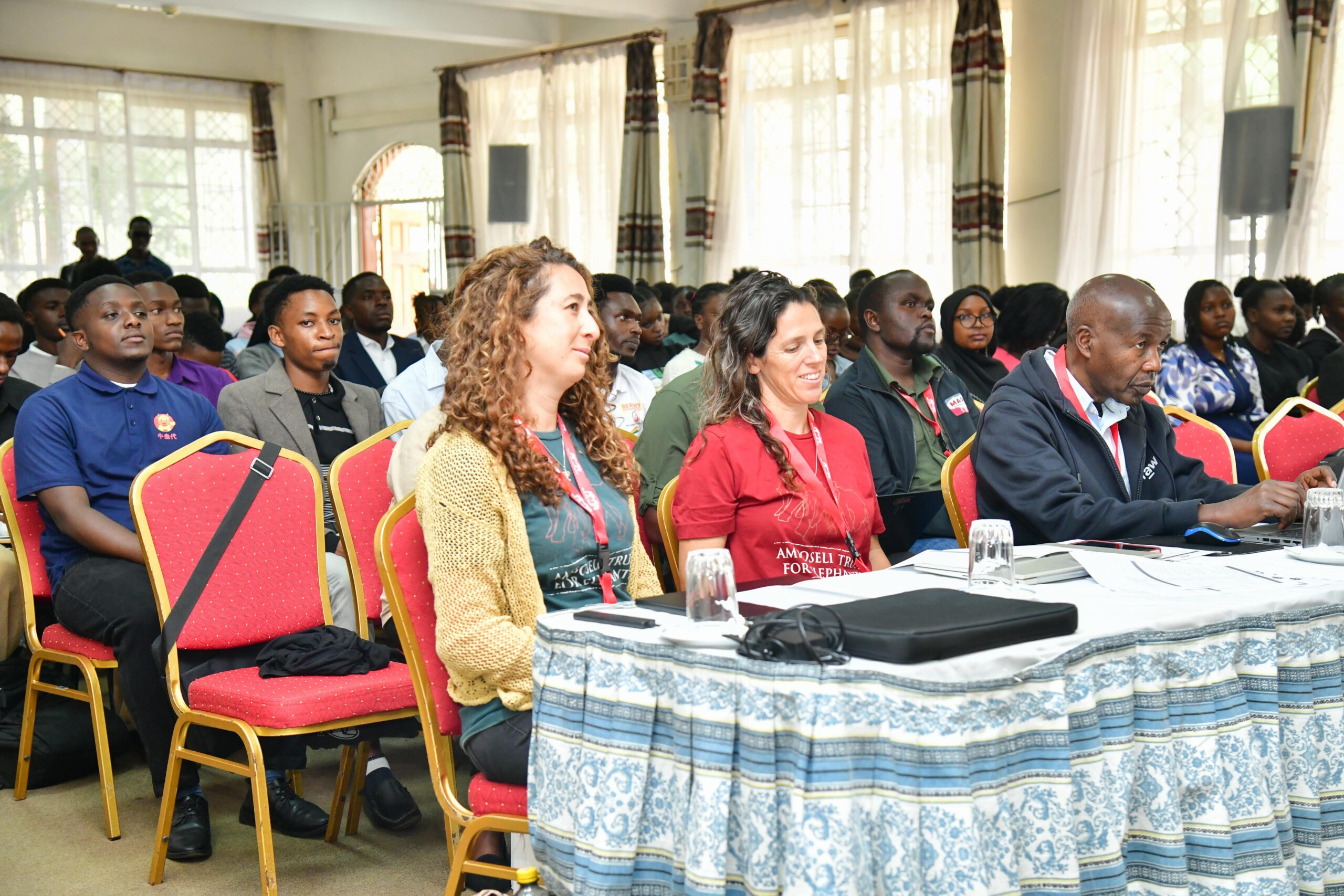
Conservation partners and students during a presentation at Kenyatta University
Through practical workshops on CV writing, presentations on opportunities available in partner organisations, and a lively networking expo, third and fourth-year students gained practical skills and industry exposure. They learned what employers are seeking, where to strengthen their technical competencies, and connected directly with potential mentors and employers. For many, it was their first direct interaction with the conservation professionals, helping them to clearly picture career pathways.
“It was a great opportunity to meet prospective employers and understand what they are looking for. Hearing about their career paths made me believe that I can also succeed in this space,” says Yvonne.
STE began this program in response to growing concern that fewer natural science graduates were pursuing careers in conservation, opting instead for more familiar sectors which have ‘easier’ access. At the heart of this effort was our Founder, Dr. Iain Douglas-Hamilton, who strongly believed in mentorship and creating pathways for young scientists. He helped shape the first conservation careers symposium, held at the University of Nairobi, planting the seed for what has now become a platform for professional development.
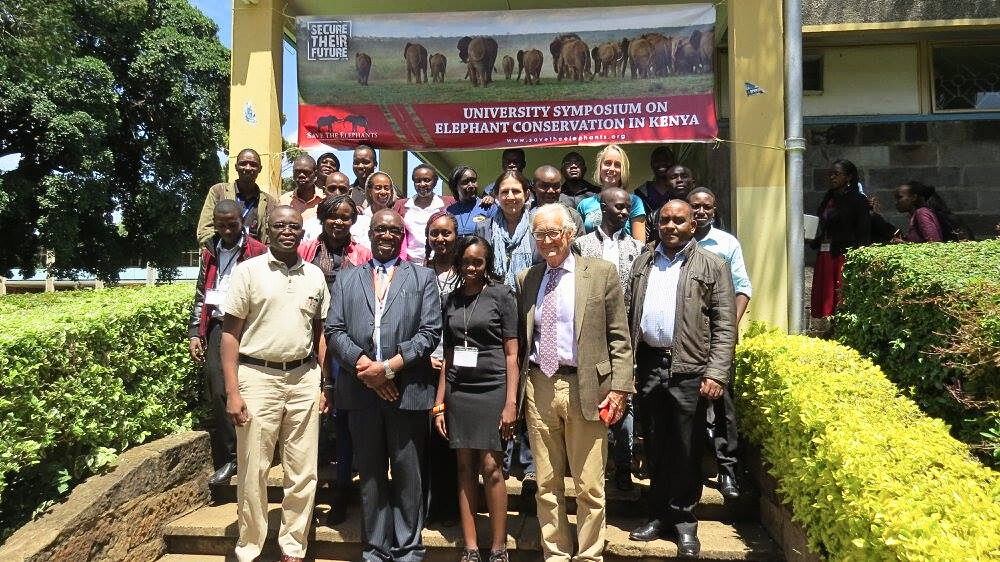
Participants of the first STE Conservation Careers Symposium held at the University of Nairobi
As biodiversity loss accelerates across Africa, maintaining a strong pipeline of skilled conservation professionals is more urgent than ever. This urgency is shared by conservation organisations across the region, including Amboseli Trust for Elephants, Born Free Foundation, Ewaso Lions, Mara Elephant Project, Mpala Research Centre, Space for Giants, WWF-Kenya, IFAW, Wyss Academy for Nature, BirdLife International, Nature Kenya, Stand Up Shout Out, and The East African Wild Life Society who participated in the third Symposium.
Most of the participating partner organisations were represented by colleagues who are themselves recipients of mentorship in one form or the other, including Dr. Festus Ihwagi, STE’s Senior Scientist and Research Policy Lead. Dr. Ihwagi spoke candidly about his formative mentorship under Iain, noting that careers in this field are built not only on academic excellence but on guidance and availed opportunities as well.
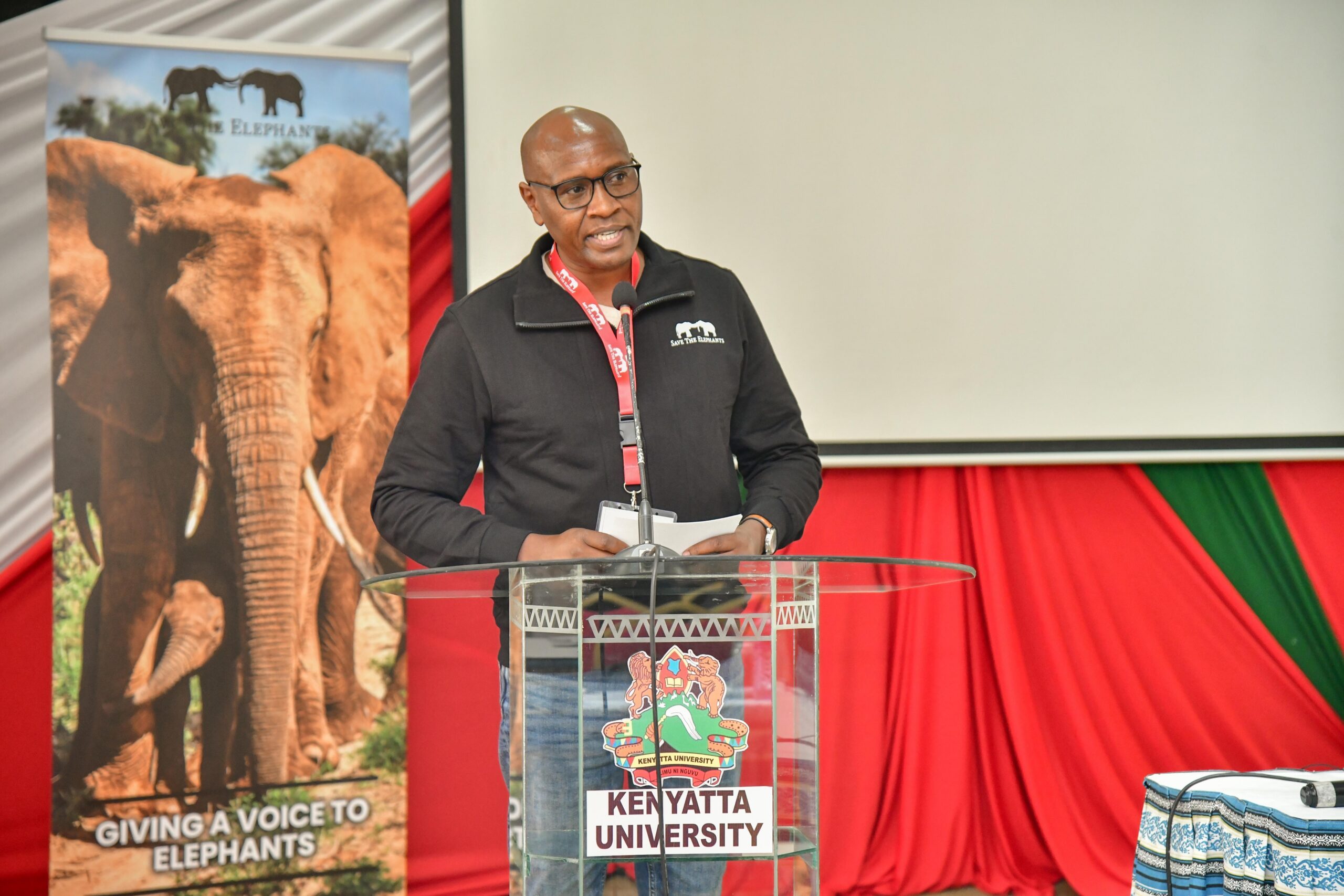
Festus Ihwagi during the Symposium at KU
Many Kenyan students are like Dr. Ihwagi and Yvonne. For them, careers in conservation are unfamiliar and seemingly unreachable. Through your support, platforms like the conservation careers symposium are bridging the gap between academic study and employment, equipping students in zoology, wildlife, environmental science, GIS and other courses with practical skills and giving them valuable direct opportunities to learn from experts and interact with professionals in the field.
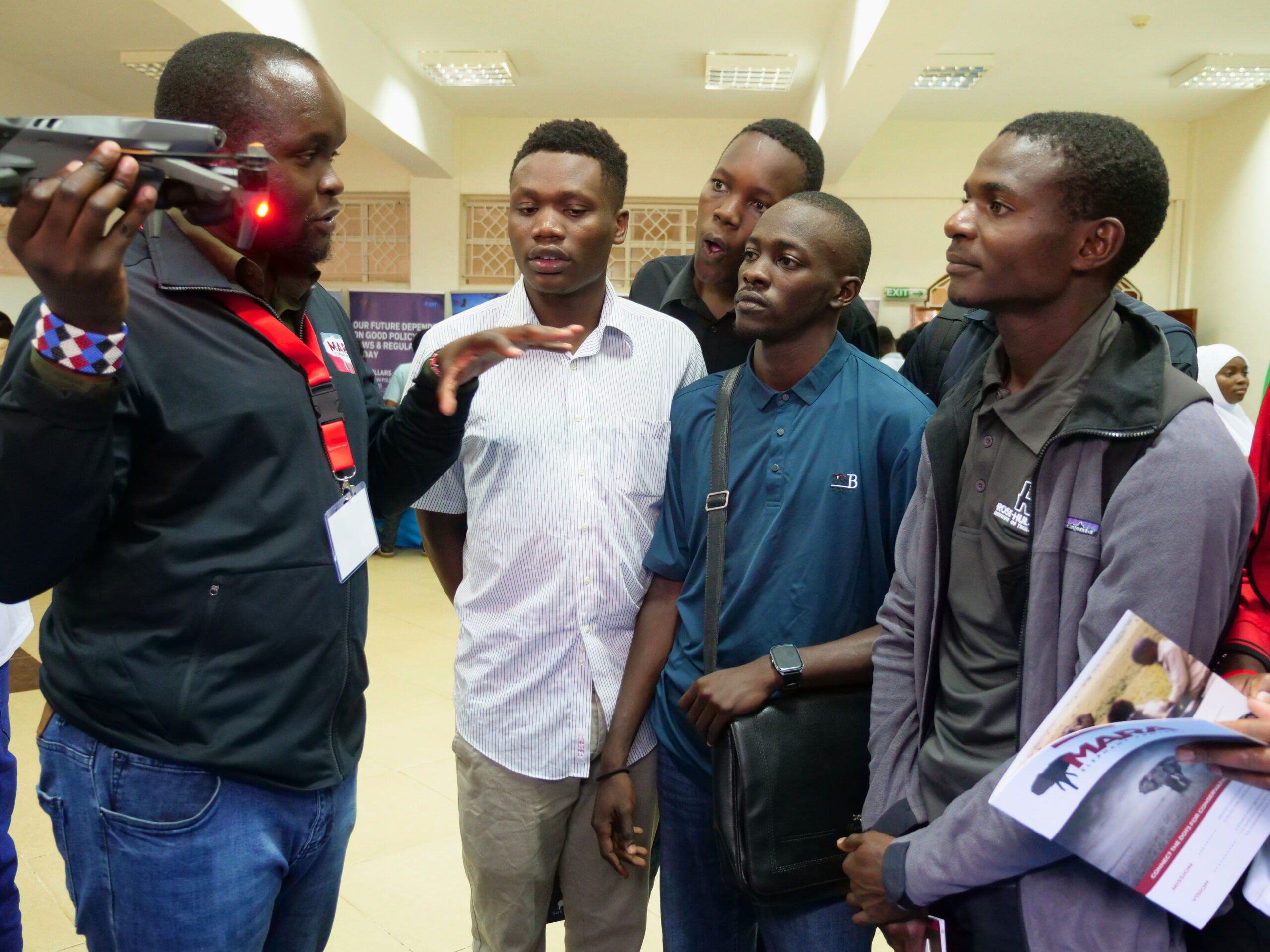
Dibblex Soyiantet, Community Engagement & Outreach Coordinator at Mara Elephant Project, speaks to students about drones during the Expo