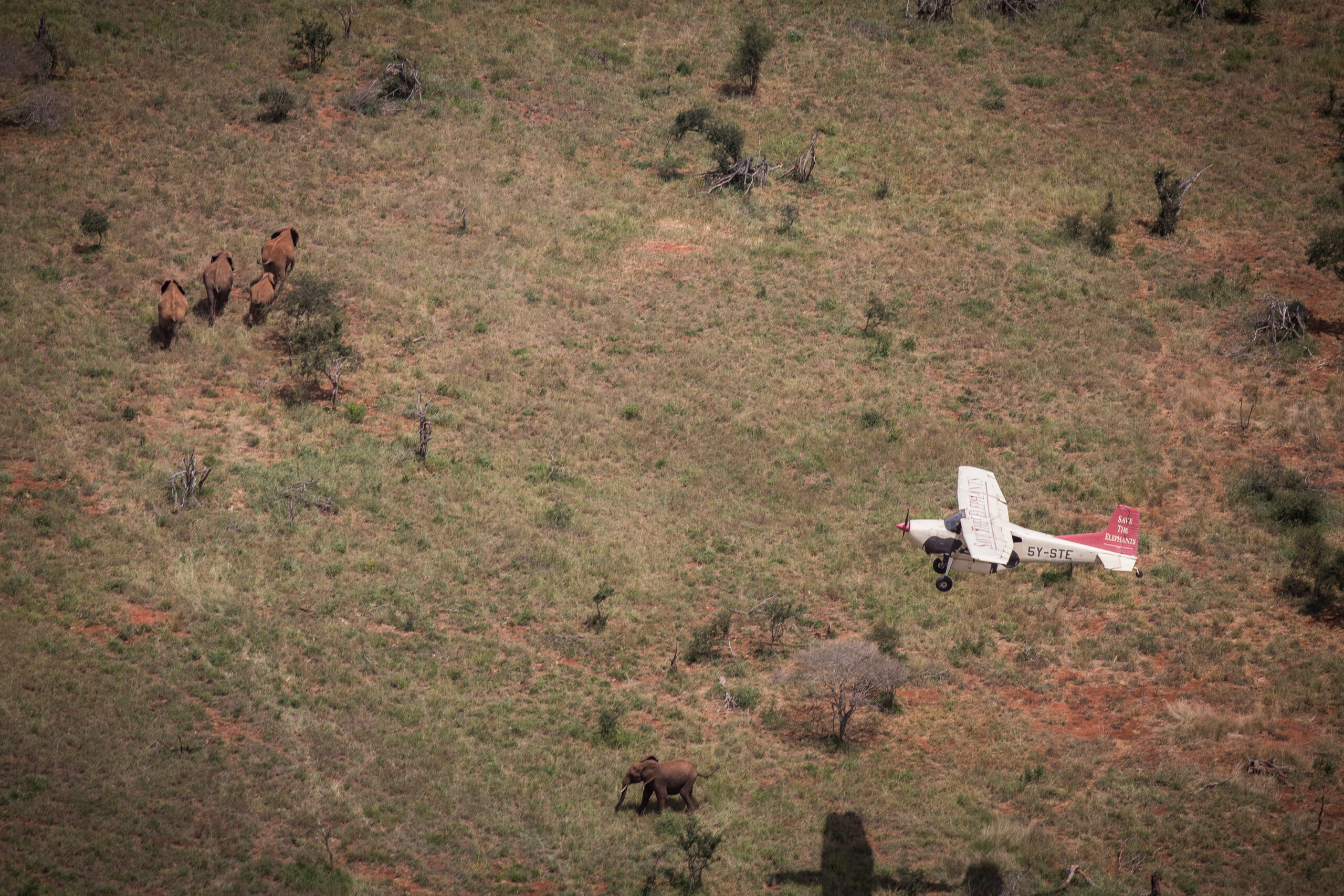
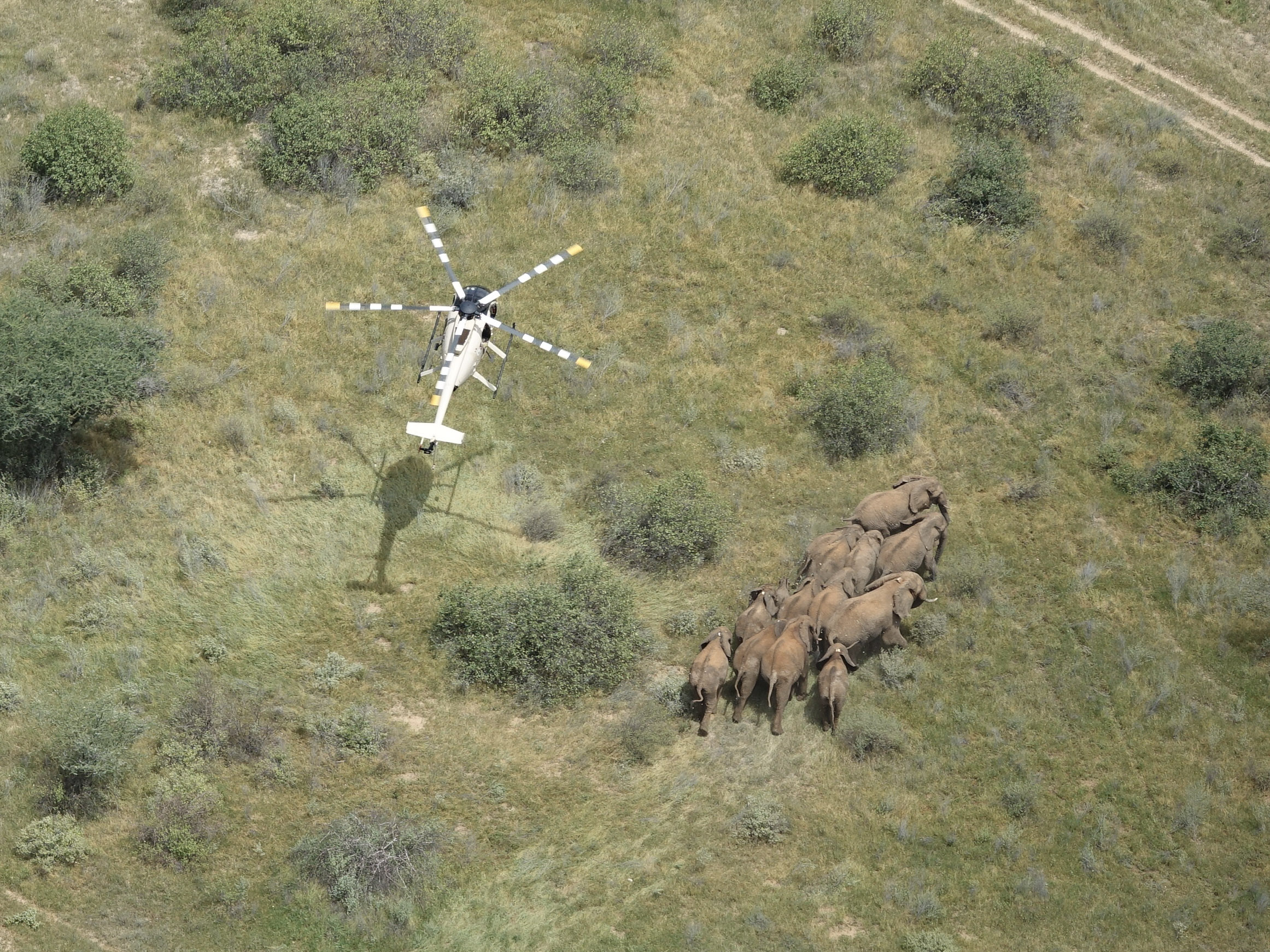
Elephants rarely stay in one place, and neither do the threats they face. Keeping pace with both depends on regular surveys, on the ground and from the air, which have been central to STE’s work for more than three decades.
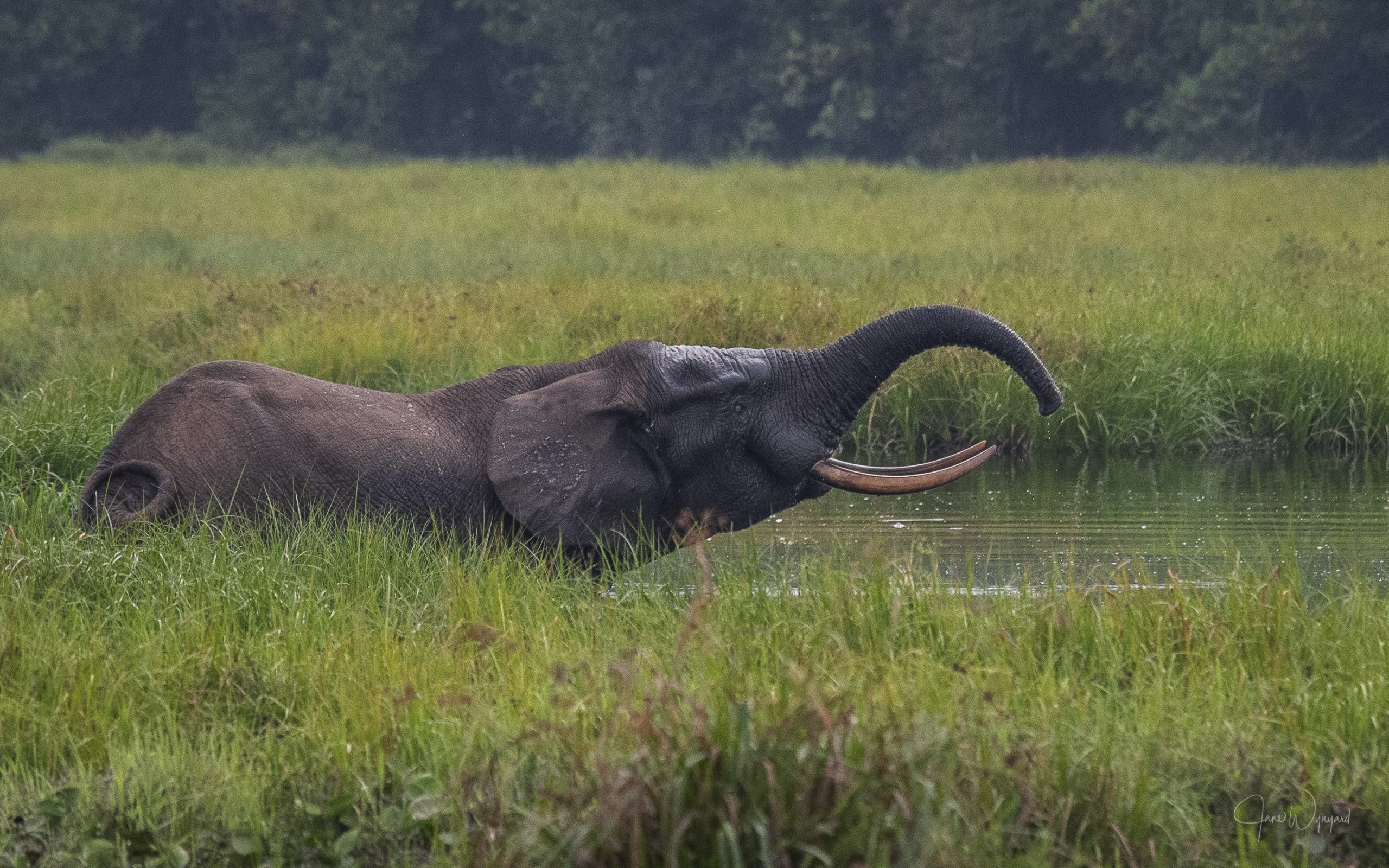
On the ground in Samburu, our teams know the elephants as individuals, recognising each one by the shape of its ears, the notches and tears along their edges, and the form of its tusks. Survey after survey, they record which elephants are seen and which are missing, building a detailed picture of families as they grow, change, and lose members over time.

When an elephant dies, ground teams locate and examine the carcass to understand how it died. This work contributes to the Monitoring the Illegal Killing of Elephants (MIKE) programme and gives an early warning when poaching begins to rise.
From the air, Save the Elephants’ aerial surveys extend that watch across areas too vast or remote to cover on foot. Flying over the wider landscape, our pilots and observers record where herds are gathering and spot carcasses in hard-to-reach areas. From above, they also see how the landscape itself is changing, with livestock, settlement, and new land use reshaping where elephants can safely live and move.
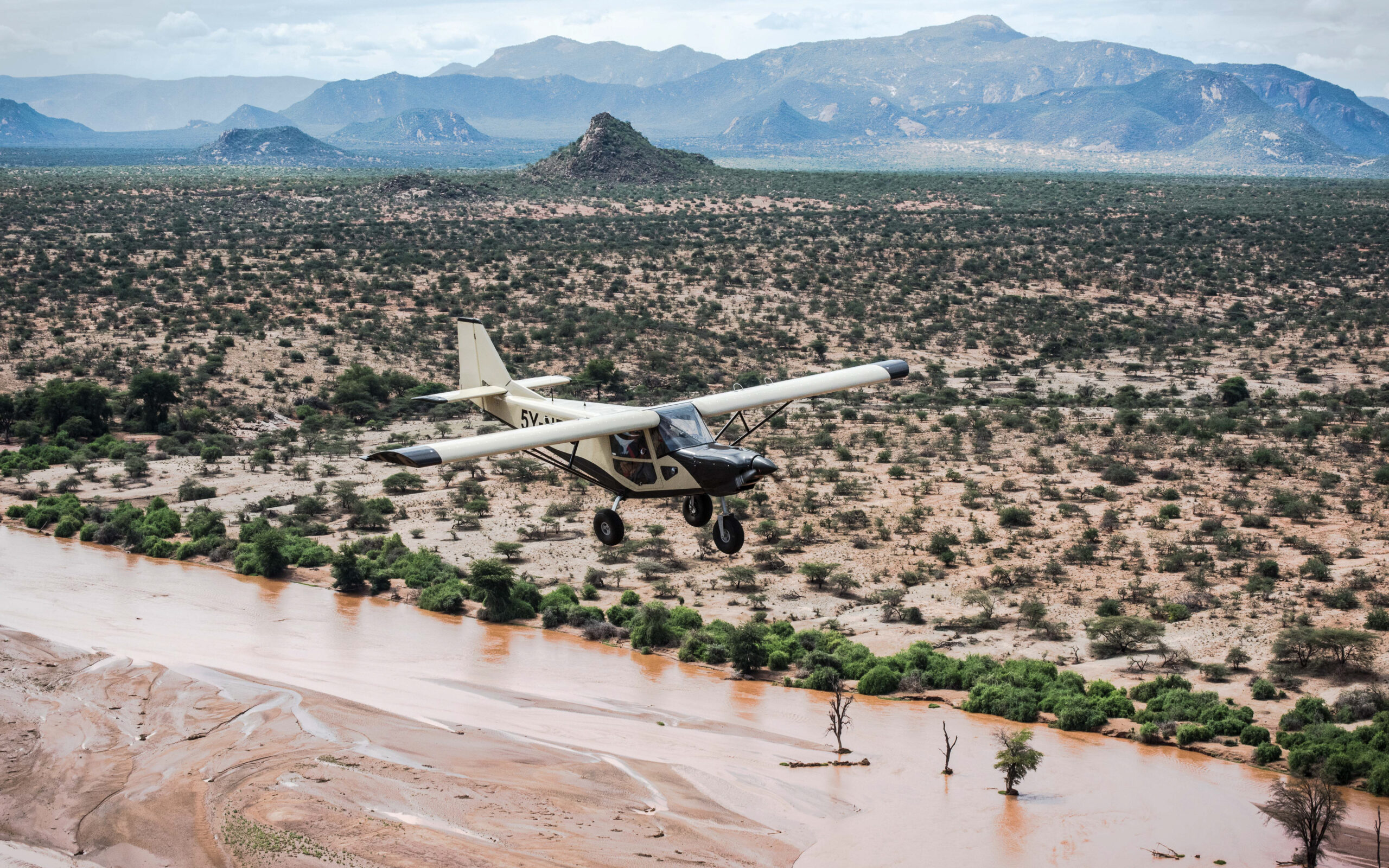
Together, these surveys give a picture of elephant life that is both broad and deeply detailed, evidence that guides wildlife authorities, conservancies, and communities in deciding where protection is most needed.